
25 Jun With exports back to pre-coronavirus levels, Moldova looks to attract more trade partners and investors
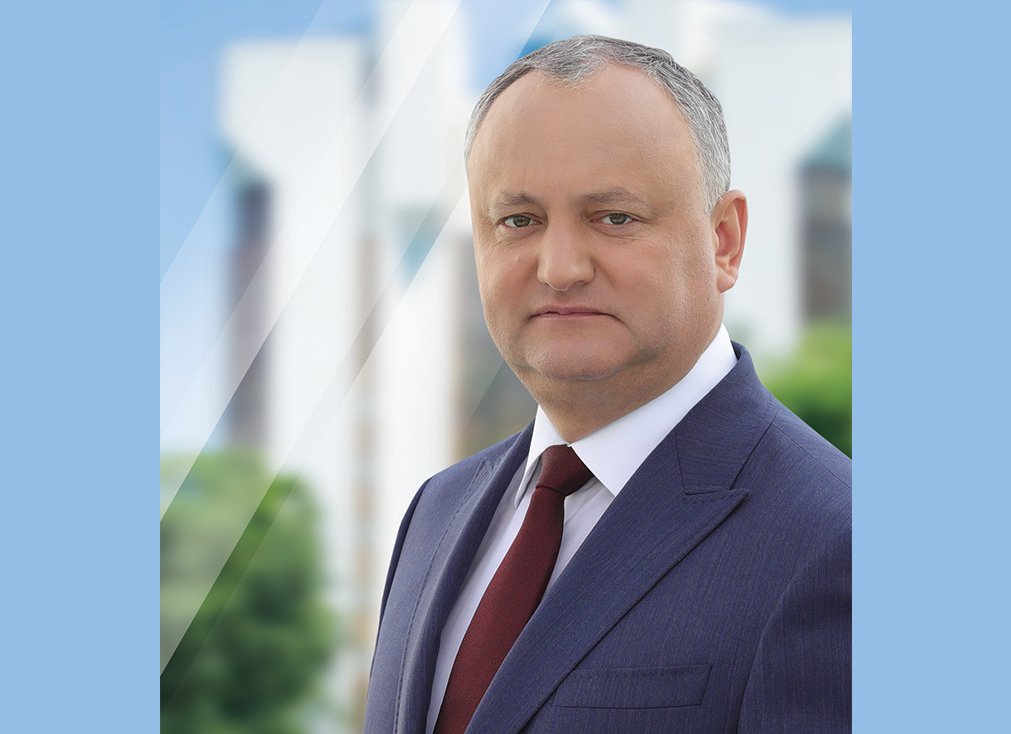
Igor Dodon, President of the Republic of Moldova, explains the advantages that come from investing in a country at the crossroads of east and west
You have said that Moldova is at a crossroads. What do you mean by that and how does it translate to the country’s politics, foreign relations, reforms and economic path?
The Republic of Moldova is on the crossroads between the European Union (EU) and the Commonwealth of Independent States. Due to its geographical situation between the two major axes, Moldova has its very own specificity and Moldovan society is divided. One part wants to be closer to and united with the EU, while another part wants to be closer to the Russian Federation under different forms such as the Eurasian Economic Union or other projects. For the overwhelming majority of states in our region, the geopolitical orientation is much clearer than in our country. As Moldova is at the crossroads of those two major geopolitical forces, we have decided to pursue a balanced foreign policy, which supposes good relations both with the east and the west.
What does this mean in practice? It means that we remain members of the Commonwealth of Independent States and we implement our association agreement with the EU that was signed in 2014. We understand that the EU will not accept any new members in the near future—because there is a very clear policy regarding its enlargement among current member states—but we will implement this association agreement in order to raise the competitivity of our economy and the quality of life of our citizens.
This balanced foreign policy also brings advantages in terms of investments and economic development, because we can benefit from economic or commercial privileges both from the east and west. Moldova is the only country in its region that can export its goods both to the eastern and western markets, as well as to other countries including Turkey. No other country in the region has such privileges.
Which are Moldova’s most important partners and investors?
In terms of trade, the EU is Moldova’s number one trade partner. In terms of investors, if we are speaking about countries, then Russia is the number one investor. This is mainly due to investments in the energy sector, as Russia controls the gas transportation system in Moldova. As for the U.S., we don’t currently have a significant volume of investments because the sales market is small and we have not yet managed to attract American investors to this or that economic sector. Among the European countries, our biggest trade and investment partners are currently Romania, Germany, Italy and the Netherlands.
As a result of the COVID-19 pandemic, the global balance is changing. Globalization may no longer be a viable option, and you can see a shift in global politics and trade. Are you looking to diversifying the regions that your investors come from?
Obviously, the COVID-19 pandemic will essentially change the attitudes and visions of potential investors and trade partners. In April, we suffered like all other countries did. In May, the economy started recovering step by step, and by early June we were already seeing it reach almost the same levels as June of last year. In terms of exports, we have almost attained the same levels as 2019, meaning we have nearly managed a full recovery of the economy already. Obviously, we are now in search of diversification of our trade partners and potential investors, although we are cognizant that the pandemic will continue for a while. We understand that, for the next few months and even until the end of this year, it will be much more complicated to find new investors and trade partners due to several restrictions in terms of the free movement of people, including travel bans, for instance.
We spoke of the success Moldova has had in terms of reestablishing its economy in May and June. What else is left to do? Can you identify the five most important policies or reforms that Moldova needs to implement in order to achieve the goals set by your presidency and the government?
I think the most vital reform is the justice system reform because this is what investors want. They want to be safe when investing in Moldova and they want to see a reformed justice system. The second very important reform is in the education domain and training the labor force. We inherited a very good education system from the Soviet Union period, but it certainly now needs to be reformed and modernized. The third domain is reforms in infrastructure investment. Recently, we have advanced quite a bit in this direction and I am hopeful that we will advance more in the near future. The fourth area that we are going to reform is the service sector. When I talk about the services sector, I am speaking about all its facets—outsourcing, financial services, tourism and others. We have resources that have not yet been realized. The fifth reform area, which we are also discussing with International Monetary Fund representatives, is public system reforms, both at the central and local levels. These are the five main domains of reforms that we are going to implement in the near future.
In terms of a timeline for these reforms, the problem is that this year we have a presidential election in November and it is likely we will have snap parliamentary elections later this year or early next year. And I think that our main efforts this year will be focused on the fight against the pandemic, as well as recovering and restabilizing our economy. It is highly probable that the government and parliament will start implementing the plans for these five domain areas in the next year. Our ambitious objective is to implement—or to advance in implementing—these major sectors within two or three years.
Another top priority of the Moldovan leadership is the unresolved issue of the Transdniestrian autonomous territorial unit that impacts the territorial integrity of our country. We are having active discussions in this direction as well and have been speaking to the special representative of the Organization for Security and Co-operation in Europe here in Chisinau, so we have an overloaded agenda.
Earlier, you mentioned that no other country in your region benefits from the advantage of having a balanced foreign policy and commercial ties with both east, west and Turkey. However, Moldova has a relatively low profile on the world scene when we speak about foreign investments. Given that the country’s government is implementing many reforms and incentives for investors, how is your office reducing this image gap?
We need to have a more proactive position. We are in a better position than is sometimes reported outside the country and many people arriving to Moldova say that the situation they see inside is much superior to the image they had before visiting. We need to promote those advantages. Taking the COVID-19 pandemic into consideration, the situation has become much more complicated but I strongly believe that we will overcome these problems shortly.