25 Jun Creating the optimal conditions for investments in Moldova’s post-COVID-19 economy
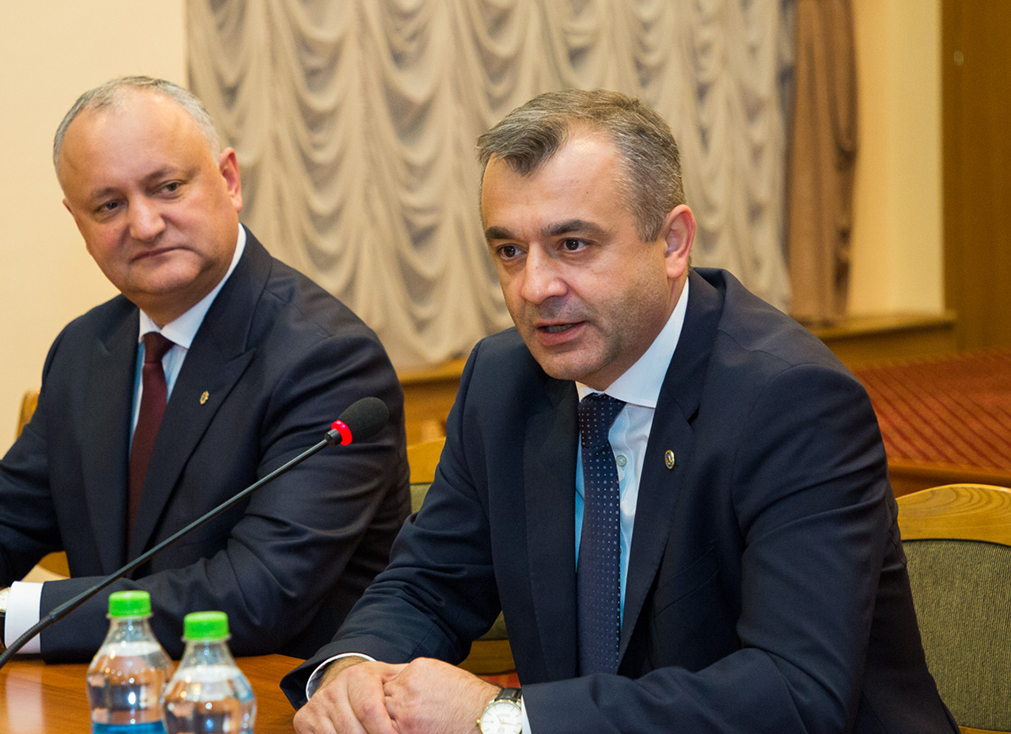
Ion Chicu, Prime Minister, describes his government’s strategies for reforms and for boosting an already strong network of international partnerships
What is the situation in Moldova today with regard to the COVID-19 pandemic and what has been the impact of the crisis on the country’s economy, health system, government actions and plans?
COVID-19 is a big challenge for us as well as the rest of the world. As of today, Moldova occupies the 21st place in Europe out of 48 countries in terms of the number of cases per one million of the nation’s population. We have about 2,600 cases per million, so we are in the middle on this ranking. Unfortunately, due to a deficit of laboratories in Moldova before the pandemic, we are in 43rd position for testing. On the other hand, Moldova has one of the lowest mortality rates related to coronavirus in Europe—it is about 3.6 percent, while the average is much higher.
What is certain is that this pandemic was unexpected and, like most countries, we were unprepared for such an event. From the beginning of January, however, we started to follow the World Health Organization’s advice about coping with this challenge. For the first time in our history, we had to introduce a state of emergency, which we ended on 15 May. We kept a lockdown for more than 60 days, which has significantly affected our economy, budgetary situation and the population’s revenue.
From 15 May and with this emergency situation ended, we had to relax the measures we had implemented on most economic activities. Unfortunately, the number of the new cases then increased, which caused us concern. However, after three months of fighting this pandemic our health system is more prepared, its capacity is higher, the situation is now under control and we will keep it controlled. A lot of Moldavian systems, including education and health, had been negatively affected by almost 30 years of independence from the Soviet Union. However, Moldova has signed an association agreement with the European Union (EU), through which we have started to implement some fundamental reforms that will reverse the situation and help us to manage future challenges and emergencies.
The most important challenge now is to restore Moldova’s economic situation and tackle this crisis. From the very beginning, we have set up a number of objectives to be achieved: the first is to maintain the substantivity of the budget on the financial system. The second is to support businesses during these difficult times and the third is to keep paying salaries and pensions to our population. Considering the country’s limited resources, we have managed to keep the situation under control so far and even managed to restore the level of our budget revenue in June. We are now in good space, but are aware of the wider situation, which remains difficult and uncertain.
With only 3.5 million people, Moldova has long been a politically strategic area for the West and for Russia. The republic of Moldova became the 36th member state of the Council of Europe on 13 July 1995 and this July marks the 25th anniversary of a landmark in your country path to European integration, as well as democratic and economic progress. Is Europe a priority for Moldova or do you seek to establish Moldova as a bridge between Russia and Europe?
From the beginning of my government’s mandate in 2020, we declared that we will implement association agreements. Moldova is a European country, our people are European and we need to integrate ourselves in Europe, as our final destination. However, we have to take into account some realities in my country, including the distribution of the population—half of which are linked to Russia, while others are linked to Romania and so on. We need to have a balanced foreign policy and we try to build friendly relations with all our strategic partners that include Russia, Romania, Europe, the U.S., Turkey, Hungary, China and a lot of other countries. We want to maintain good relations with all of them because, as I said, our economy is now more tied to Europe but we also keep our relations with Russia. It is in the interest of our country to develop these kinds of relationships. At some stage, Moldova will become a more integral part of Europe, but we still need to maintain good relationships with all our partners.
What are some of Moldova’s strategic advantages when it comes to attracting foreign investors?
Our strategic partnership agreements are very important. We have association agreements with the E.U. and strategic partnerships with the U.S., Russia, Turkey, China, Hungary and other countries. The most significant investment coming in Moldova is from these countries and we have wonderful relations with our neighbors Romania and Ukraine. The most substantial part of our exports go to Romania and we want to increase our commercial relationship with that country. Overall, Moldova has free trade agreements with more than 43 countries and investing in Moldova means taking up opportunities for exports and selling goods and services to numerous countries.
We have the friendliest investment climate at the lowest tax rates in the region, a specific tax regime for investors and free economic zones. Moldova’s largest international investments lie in our energy, agriculture and IT sectors, and we have a lot of foreign companies investing in that last sector. We also have a number of Japanese automotive companies operating here and about 94 percent of our banking system’s assets belong to western countries—two facts that indicate how good this country is as a destination for investment.
What initiatives do you have in place to boost international investments into Moldova?
We want to create the best conditions for investment in this country. Developing Moldova economically and making it richer will allow us to remove other issues that we face. We are trying to attract more investors to this country and to open our market. For example, we have launched a large privatization program. For 30 years, one of our major assets—our railways—have been untouched and now we want to privatize that state-owned asset in order to restructure our economy.
My government started its mandate by announcing significant investment in public infrastructure in the energy sector and other areas. For this reason, in a few months we intend to issue a significant amount of Eurobonds. We need to connect our country to financial markets and we need substantial investment in our infrastructure. Without that kind of public investment, it is difficult to imagine vast private foreign investment in the country.
Our strategy now is to offer all opportunities to investors and to economically develop this country. Following this model, geopolitical issues and any others will be automatically solved—at least that is our belief. We are also fully aware that we need to implement other reforms, not only economical. For instance, our public administration is one of the most inefficient in the region and we need to delegate more local competences. This is an important reform we need to make and we are lucky because we benefit from huge support from the EU, U.S. and other partners in these areas. I am optimistic enough to say we will manage to overcome this situation within a few years. Even given this issue, today’s investors are protected by the state, and our policies and taxes are quite predictable—I would like to take this opportunity to invite investors to my country.
It has been 28 years since we became independent. During this transition, we have started to fix many areas of public administration. Our association agreement with the EU was signed in 2014 and our country is now on a good path. Some important reforms are being implemented and we have achieved some good success in reforming our public finance management. In this, we have received a lot of support from the International Monetary Fund and we have a sound banking system. The most important reform is in public administration and we need to ensure independence from governmental influence—not just from internal political influence but also from external influence. We need to restore the trust of our citizens in their own state. There are external factors that are somehow trying to challenge the necessity of our state and we are fully aware of that.
Do you have a final message for the readers of Newsweek?
This is a time of crisis and we need to pass through this period but I can assure readers that Moldova will remain a good destination for investment. Moldova ended last year with a budgetary deficit of about 1 percent and the rate of governmental debt to gross domestic product is about 25 percent, which is the lowest in the region. In addition, our inflation rate had been running at about 5 percent but last year it was 3 percent and this year it will be even less. Considering these macroeconomic indicators and parameters, you can judge that the situation in our country means it is a good destination for investment. I welcome you all to come and I can guarantee that you will find opportunities for profitable business here in this wonderful country called Moldova.